Does Jaw Botox for Slimming and Tension Relief Cause Permanent Muscle Atrophy? Insights from a 6-Year Global Study
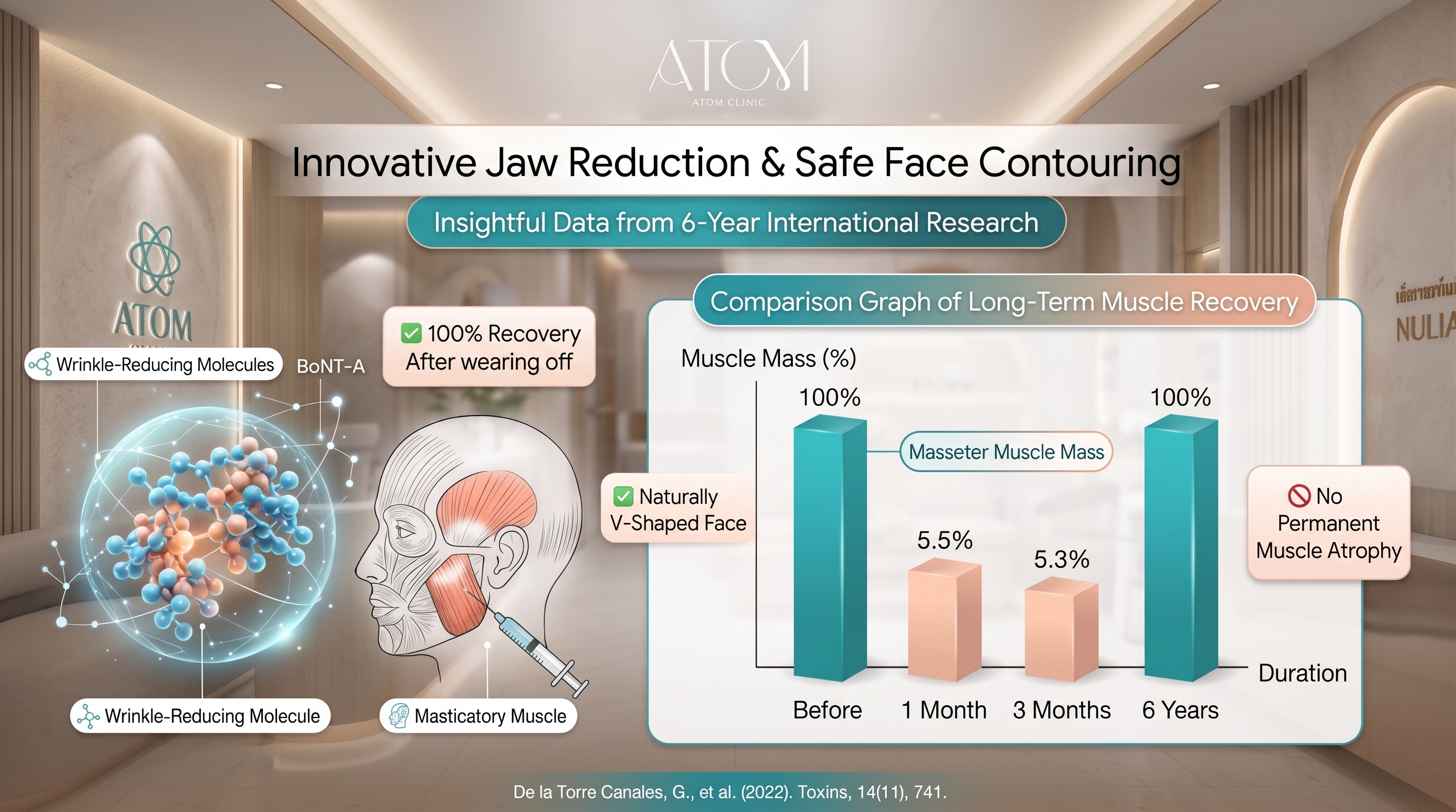
Injecting Botox (Botulinum Toxin Type A) into the jaw and temple muscles not only helps slim and contour the face, but also offers significant medical benefits in relieving masticatory muscle tension (such as Office Syndrome or teeth grinding/bruxism). Clinical research confirms that the muscle-reducing effect is 100% reversible once the medication wears off, without causing permanent muscle atrophy.
This landmark study was published in the international medical journal Toxins (2022). Researchers followed patients who received jaw and temple Botox injections for up to 6 years (72 months) to verify both therapeutic efficacy and long-term safety. Key findings include:
3 Key Findings from the 6-Year Follow-up Study
1. Long-Term Pain Relief
- Rapid pain reduction: Pain levels decreased significantly starting from the first month after injection.
- Sustained results: Participants experienced a continuous, long-term reduction in pain perception (VAS).
- Reduced pain sensitivity: Pressure Pain Threshold (PPT) improved noticeably by month 3 and remained stable over the long term.
2. Temporary Jaw Slimming with Full Recovery (Reversible Muscle Thickness)
- Months 13: Ultrasound imaging showed a clear reduction in the thickness of the masseter (jaw) and temporalis (temple) muscles, which is when patients achieve visible jaw-slimming results.
- After 6 years: Once the toxin wore off and without repeat injections, the patients' muscle mass fully recovered to its original pre-treatment thickness (Baseline).
- No need to worry about atrophy: The study concluded that Botox injections do not permanently damage muscle structure.
3. High Safety Profile
- High safety: The dosages used to treat muscle tension or slim the jaw (30U75U for the jaw, 10U25U for the temples) are safe and well below toxic levels.
- No permanent side effects: No long-term chewing impairment was observed after the muscles recovered.