Thread Lift Side Effects: Swelling, Bruising, Dimpling & Meteora Cog Threads
Last updated: 23 Nov 2026 | 13 Views |

What Are the Side Effects of Thread Lifts? Understanding Swelling, Bruising, and Warning Signs
If you are considering a thread lift to contour your jawline, key questions before booking are: how much swelling or bruising should you expect afterward, and which symptoms require a doctor's evaluation? A meta-analysis compiling data from 2,827 patients reports that swelling and bruising are common in the initial phase, while skin dimpling or thread visibility and palpability are also important possibilities to understand before making a decision (Zhou & Zhuang, 2026).
What is a Thread Lift?
A thread lift is a procedure in which a doctor places medical threads beneath the skin to support and reposition sagging tissues in targeted areas, such as the lower cheeks and jawline. Because threads come in various materials and designs, a doctor should assess your degree of skin laxity, skin characteristics, and expected results before selecting the most suitable approach for you.
What Symptoms Can Occur After a Thread Lift?
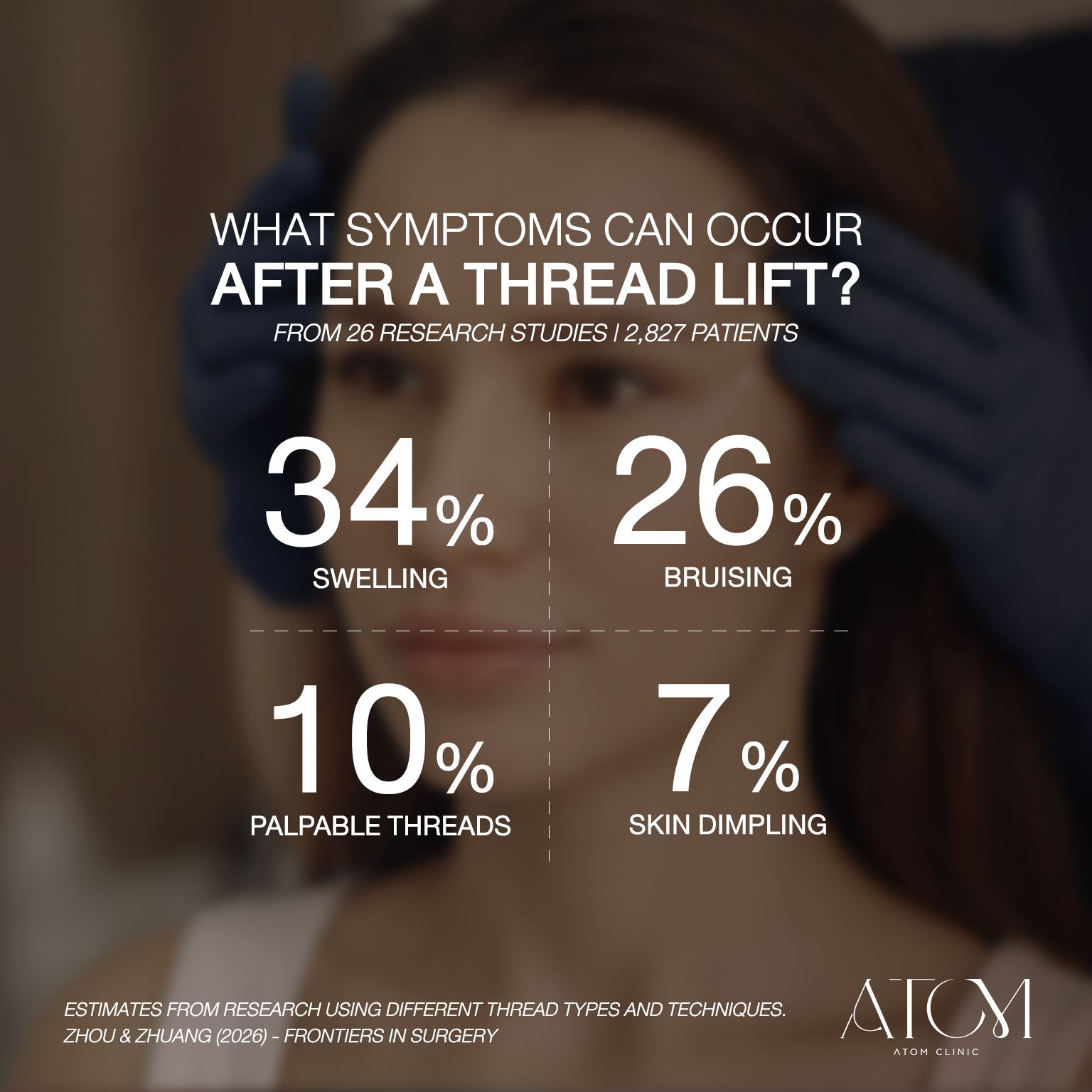
Swelling and bruising are early-stage symptoms resulting from the tissue's natural response to thread placement. The meta-analysis reported estimated rates of 34% for swelling and 26% for bruising, noting that initial symptoms such as swelling, soreness, and bruising gradually subside as the tissue heals (Zhou & Zhuang, 2026).
Skin dimpling, thread visibility, or palpable threads represent another category of findings in the research, with estimated rates of 10% for thread visibility/palpability and 7% for skin dimpling. If skin dimpling does not improve, a thread becomes increasingly visible, or a thread extrudes through the skin, you should contact the clinic for a medical evaluation (Zhou & Zhuang, 2026).
These figures are derived from studies utilizing various techniques and thread types, and each symptom rate may draw from different study subsets. Therefore, individual risks should be evaluated alongside a doctor based on your specific skin characteristics, treatment plan, and the type of thread used (Zhou & Zhuang, 2026).
Can Meteora Feather Threads at Atom Clinic Cause Skin Dimpling?
Atom Clinic offers Meteora feather threads as an option for patients seeking lower-cheek lifting and jawline contouring. These threads are made from Polydioxanone (PDO), a dissolvable material, and feature barbs along the thread to anchor and support facial tissues.
Concerned about skin dimpling after a Meteora thread lift? At Atom Clinic, doctors carefully evaluate your skin characteristics and degree of laxity before planning lower-cheek and jawline lifting, tailoring the placement depth and tension specifically to each individualas both factors are closely associated with post-procedure skin dimpling (Yi & Park, 2025).
If you are worried about dimpling or have an upcoming event near your procedure date, you can consult a doctor at Atom Clinic to assess whether Meteora threads suit your skin type and laxity level, while planning an appropriate recovery timeline and post-treatment follow-up.
How Many Days Does Swelling Last, and When Should You Contact a Doctor?
Swelling and bruising may occur during the first few days, and the timeline for recovery varies from person to person. Research classifies swelling as an early-phase symptom and notes that reported recovery durations differ across studies. If you develop a fever or notice that swelling is worsening, you should contact your treating physician immediately.
What Should You Ask Your Doctor Before Getting a Thread Lift?
- Based on my skin characteristics and degree of laxity, how much jawline improvement can I realistically expect?
- What type of thread will you use, and why is it the best choice for my case?
- How much recovery time should I allow if I have an important event or on-camera appearance?
- If swelling worsens, dimpling occurs, or I can feel a thread, how should I reach the clinic and when should I come in for a check-up?
If you are considering a thread lift for jawline contouring, you can schedule a consultation with a doctor at Atom Clinic to assess your skin laxity, discuss realistic expectations, and plan a recovery schedule that fits your calendar.
References
Yi, K.-H., & Park, S. Y. (2025). Facial thread lifting complications. Journal of Cosmetic Dermatology, 24(1), Article e16745. [https://doi.org/10.1111/jocd.16745](https://doi.org/10.1111/jocd.16745)
Zhou, X., & Zhuang, S. (2026). A meta-analysis of complications of thread lifting. Frontiers in Surgery, 13, Article 1769458. [https://doi.org/10.3389/fsurg.2026.1769458](https://doi.org/10.3389/fsurg.2026.1769458)


