Wegovy vs. Mounjaro: Key Differences & Research Comparison | Atom Clinic
Last updated: 26 Nov 2026 | 130 Views |

How Do Wegovy and Mounjaro Differ? Understanding Weight Management Pen Research Made Simple
If you have ever seen figures stating that weight-loss pens help reduce body weight by 13.7% or 20.2% and wondered what those numbers actually mean, the answer is that they represent the average outcomes of two groups in the same clinical trial followed over 72 weeks. This article explores how these two medications differ, what the clinical research measured, and which key details you should bring up when speaking with your doctor (Aronne et al., 2025).
What Are Wegovy and Mounjaro?
Both are injectable medications commonly referred to as weight-loss pens, each containing a different active ingredient and mechanism of action (Aronne et al., 2025).
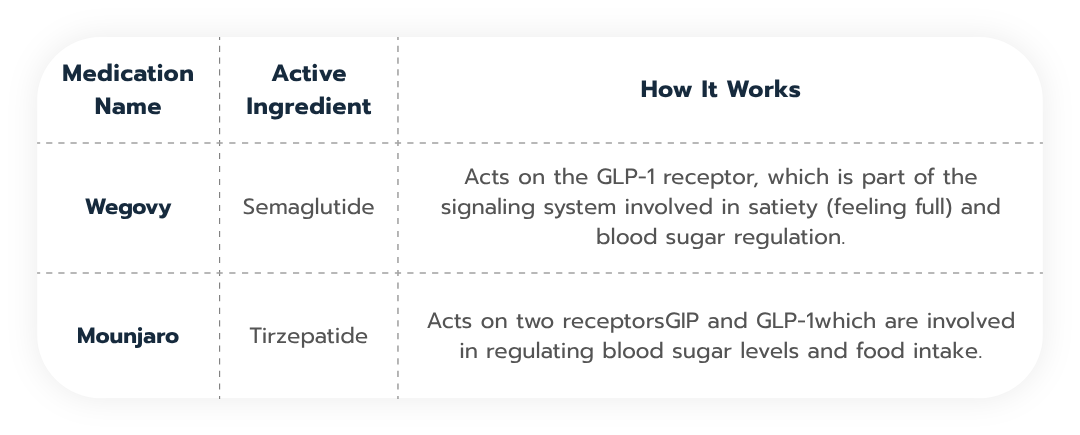
When reading clinical studies, you will frequently see the terms semaglutide and tirzepatide, as researchers refer to medications by their active pharmaceutical ingredients.
How Much Weight and Waist Circumference Reduction Did the Research Show?
The SURMOUNT-5 trial randomized 751 adults with obesity and without type 2 diabetes to receive either medication once weekly via injection, tracking their outcomes over 72 weeksapproximately 1 year and 5 months (Aronne et al., 2025).
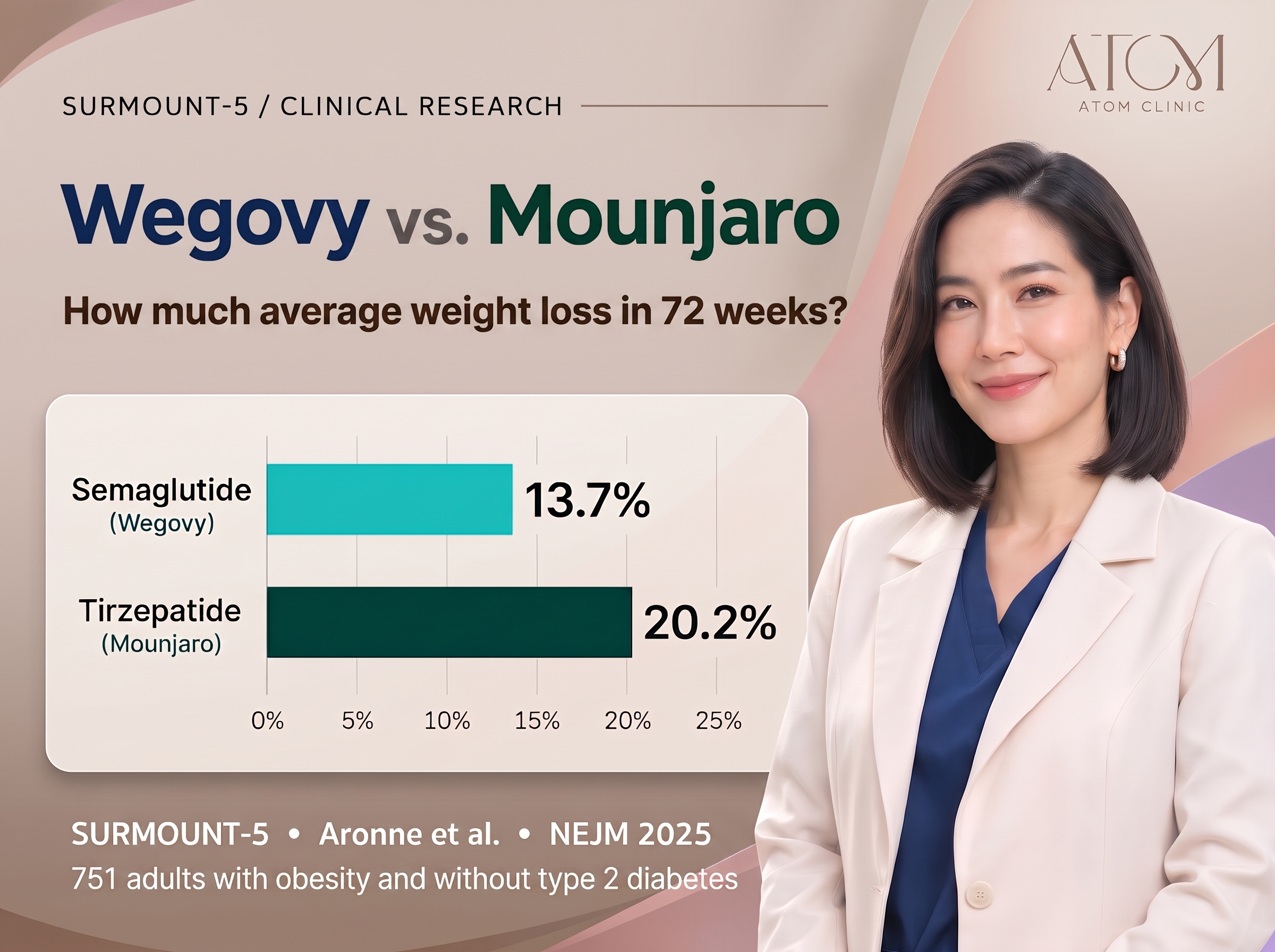
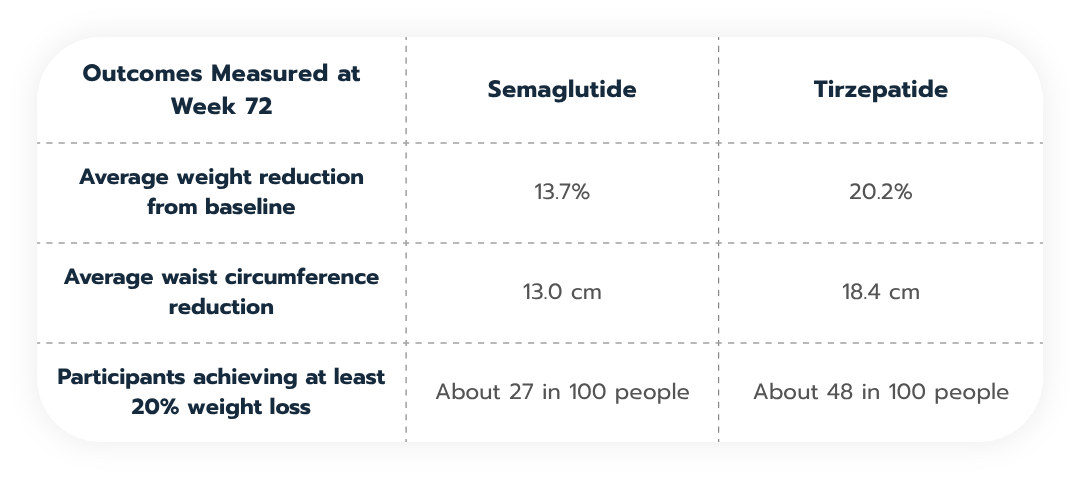
How to interpret these numbers: Using a starting weight of 100 kg as an example, a 13.7% reduction equals 13.7 kg, while a 20.2% reduction equals 20.2 kg. The bottom row indicates how many participants reached the 20% weight-loss threshold, illustrating that individual responses vary from person to person (Aronne et al., 2025).
Other placebo-controlled trials have similarly demonstrated greater weight loss in groups receiving active medicationsuch as the STEP 1 trial evaluating semaglutide over 68 weeks and the SURMOUNT-1 trial evaluating tirzepatide over 72 weeks. However, when comparing the difference in efficacy between the two drugs directly, the SURMOUNT-5 trial provides a more direct answer because it evaluated both medications head-to-head within the same study (Aronne et al., 2025; Jastreboff et al., 2022; Wilding et al., 2021).
What Are the Common Side Effects?
Commonly reported side effects in both groups include nausea, constipation, diarrhea, and vomiting. In the SURMOUNT-5 trial, most symptoms were mild to moderate in severity and typically occurred during dose-escalation periods. Because some participants discontinued treatment due to gastrointestinal symptoms, it is important to discuss in advance with your doctor which symptoms to report and how side effects will be monitored during treatment (Aronne et al., 2025).
What Should You Ask Your Doctor Before Using Weight Management Pens?
- Is this medication appropriate for my health profile? Share any underlying medical conditions, health history, and current medications so your doctor can evaluate suitability.
- How should we set goals and track progress? Discuss when and how weight, waist circumference, and potential side effects will be monitored throughout treatment.
- What is the long-term weight management plan? Ask about nutrition, physical activity, and follow-up care if the medication needs to be adjusted or discontinued.
If you are considering weight management medication, you can contact Atom Clinic to inquire about scheduling a physician consultation. Please bring your medical history and a list of any current medications to assist with your clinical evaluation.
References
- Aronne, L. J., Horn, D. B., le Roux, C. W., Ho, W., Falcon, B. L., Gomez Valderas, E., Das, S., Lee, C. J., Glass, L. C., Senyucel, C., & Dunn, J. P. (2025). Tirzepatide as compared with semaglutide for the treatment of obesity. The New England Journal of Medicine, 393(1), 2636. [https://doi.org/10.1056/NEJMoa2416394](https://doi.org/10.1056/NEJMoa2416394)
- Jastreboff, A. M., Aronne, L. J., Ahmad, N. N., Wharton, S., Connery, L., Alves, B., Kiyosue, A., Zhang, S., Liu, B., Bunck, M. C., & Stefanski, A. (2022). Tirzepatide once weekly for the treatment of obesity. The New England Journal of Medicine, 387(3), 205216. [https://doi.org/10.1056/NEJMoa2206038](https://doi.org/10.1056/NEJMoa2206038)
- Wilding, J. P. H., Batterham, R. L., Calanna, S., Davies, M., Van Gaal, L. F., Lingvay, I., McGowan, B. M., Rosenstock, J., Tran, M. T. D., Wadden, T. A., Wharton, S., Yokote, K., Zeuthen, N., & Kushner, R. F. (2021). Once-weekly semaglutide in adults with overweight or obesity. The New England Journal of Medicine, 384(11), 9891002. [https://doi.org/10.1056/NEJMoa2032183](https://doi.org/10.1056/NEJMoa2032183)


